     |
|
|
Our Model > Progress > Mauch Chunk at end
of 2011
This page shows our progress since the Exhibition at the end of October 2010. It took some time to re-erect the baseboards as we were awaiting tables so that we could put the boards up at a lower height to make the scenery easier to do.
Once the boards were up on the tables, Paul
and Chris started to tidy up the wiring, using a hot glue gun to attach it more
robustly to the undersides of the boards. Paul has also sectioned the track into
two sections for the power supply to reduce the effect of short-circuits. At the
same time he has increased the current the system will take to reduce
restrictions on the locomotives we can run. Steve had a go
at the roofs on Susquehanna Street
buildings putting in access hatches and chimney
stacks, but most of the recent work has been with utility and
telegraph poles and the 'green scenery'. The unusual telegraph poles that hang
out over the river were improvised from Cornerstone poles, some wire and some
circuit board ties. Fencing of various kinds has been erected
(now being connected together with monofilament), and the ground cover has been improved. The river surface had been built up with
layers of varnish, but a final layer of solid water failed to set - and also
made it look like the sea, so it was all peeled off and back to the drawing
board. A layer of dark green paint was applied, with tan around the edges and
more household (i.e. mucky brown) varnish was applied - four coats so far. Most recently, this was finished to a smooth and highly reflective finish - more a lake than a river, but better than the sea. Static grass of various colors and lengths (color in reality is better than in the photos) was applied with a Noch GrasMaster, and SuperTrees and other garden plants (mailny Astilbe) were used to make trees on the embankment - as previously decribed.
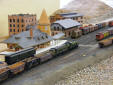
It's beginning to look much more realistic as the track is separated from the town. I'm cheating here by putting up these photos of progress in 2011 after the Exhibition photos from late October. However, they were taken from June through to October and provide a record of the work we did on the layout in that time period. Dave spent a lot of time building the
variety of telegraph poles and electric utility poles found in Mauch Chunk
(according to our photos). These show them as built and weathered and then in
situ - showing how they really add to the mood of the scenes. Steve then did another brass etch including
some fencing to go round the back of the park and some windows for the track
sheds, which were then built by Chris from laser cut strip wood. The Mikado M3 was painted for us (still to
be weathered) and a Babyface A/B unit purchased from eBay, as the price has
dropped since the ARHS body shells became available. Also another K1 unpainted
from David in the UK. There are also some general shots here showing new
chimneys, some dispatch semaphore signals and the difference that all the
telegraph poles and extra greenery make. Chris designed and built a new lighting
gantry that can be transported in two parts but bolts together to give a single
15ft span so that the view of the model is not interrupted. Works brilliantly. Here are a couple of photos showing,
respectively, Paul, Steve, Chris and Gordon (who has now joined us). Last, but by now means least, Paul has modified and built DCC kit that gives us separate power supplies to the two directions of travel, so that shorts will only stop one direction at a time. The power has also been boosted so that locos with older motors can be run. As is so often the case, this was not photographed as it is under the layout - I'll try and do better next time! So by mid-October, everything was ready for the Warrington exhibition. See the photos on the Exhibition page. |
|


